
Checking Criminal History in Indiana
Begin with the question the record should answer. An Indiana police report describes what an officer recorded. A booking record confirms county custody. A court docket tracks charges, bail, hearings, and the result. Indiana has no single borough product that combines those sources. The official Indiana route starts with the police agency involved, then moves to the court or jail that owns the next part.
- Identify whether Indiana Borough Police, IUP Police, or another agency handled the event. Ask that agency for its records contact.
- Describe the incident by date, place, incident number, and exact report sought. Ask for available public portions if some material is withheld.
- Search the UJS Case Search at the Magisterial District Court level. Use the Indiana-area district when a county-wide query fails.
- For a held-for-court case, inspect the Common Pleas docket and contact the Indiana County Clerk of Courts for pleadings or certified copies.
- Use PATCH only when a Pennsylvania repository check is needed. It does not replace the police report, jail record, or court file.
An Indiana result should be matched with care. Confirm the court, docket number, filing date, and other lawful identifiers before treating a similar name as the same person.
Indiana Borough and IUP Police Records
Indiana has a local split that matters. Borough streets and many community incidents fall within the borough department's role, while campus incidents may belong to IUP Police. The county Sheriff is not the default custodian for either agency's full incident narrative. A requester who sends every police-record inquiry to the courthouse can lose time because the court keeps filed case material, not the investigating officer's whole report.
Use the official Indiana Borough Police page to confirm the department channel. The research found no dedicated online report-order form or current copy fee. That means the safe request is specific and modest: give the incident number if known, the date and location, the desired medium, and a clear description of the record. For a campus event, use IUP Police instead. If ordinary service does not resolve the request, direct a Pennsylvania Right-to-Know request to the agency that holds it.
Indiana Police Department Records
Indiana Borough Police creates the local incident or offense report and the agency's arrest material. That Indiana record may include the call, officer narrative, alleged offense, time and place, and related identifiers. It does not prove that a prosecutor filed the same charge or that a court entered a conviction. Investigative details, victim information, juvenile material, and other protected content can be redacted or withheld under Pennsylvania law.
No official Indiana department source reviewed for this build published a standalone report portal, full form inventory, service hours, or fee schedule. Confirm those details with the department before sending payment or making a trip. A focused request should also ask for reasonably segregable public portions. That phrase lets the agency release nonexempt material even if the complete report cannot be disclosed.
Indiana's Two Criminal-Record Addresses
The county seat places the court and jail in different parts of Indiana. The Indiana County Courthouse Clerk of Courts at 825 Philadelphia Street maintains criminal filings from its first-floor counter. The building also contains the Court of Common Pleas, Sheriff, District Attorney, Public Defender, and Probation. The combined title, Prothonotary and Clerk of Courts, can cause a mix-up because the Prothonotary side handles civil matters.
Custody and booking questions go to Indiana County Jail at 665 Hood School Road. Its business office runs weekdays from 8:30 a.m. to 4:00 p.m.; call 724-471-7500 for current commitment verification. Jail Records uses fax 724-471-7306. The county publishes no searchable jail roster, so a visit to the courthouse will not replace a call to Hood School Road. The official jail page is the source for current contact details.
Clerk of Courts
825 Philadelphia Street, first floor
Indiana, PA 15701
724-465-3855
Weekdays, 8:00 a.m. to 4:00 p.m.
Indiana County Jail
665 Hood School Road
Indiana, PA 15701
724-471-7500
Business office: weekdays, 8:30 a.m. to 4:00 p.m.
Indiana Arrests and Bookings
An Indiana arrest can begin with Indiana borough police, IUP Police, PSP, or another authorized agency. The arresting agency keeps the event narrative. If custody follows, Indiana County Jail creates an intake and commitment record. The area Magisterial District Judge records the complaint, preliminary arraignment, bail, and hearing. Each source answers a different question.
No official Indiana or county booking log, arrest blotter, or mugshot gallery was found. Call the jail for present custody. For a copy, ask Jail Records and identify the booking date, arresting agency, court or docket if known, and the fields needed. Ask about the current fee and identification rules because the county page publishes neither. A person missing from the Pennsylvania DOC locator may still be in this county jail because the state tool excludes county-only custody.
Note: An arrest records suspicion and custody, while only the court docket can show whether a charge was dismissed, diverted, or decided.
Use UJS for Indiana Case Records
Indiana does not operate a separate borough case portal. The statewide UJS system supplies the public docket route for area Magisterial District Court matters and Indiana County Common Pleas cases. Start with participant name when no docket is known, choose the court type, select Indiana County, and set the case category. For an unsuccessful MDJ search, UJS itself recommends switching the search from County to the specific District Court.
| Search control | Best Indiana use |
|---|---|
| Court Type | Choose Magisterial District Court for the initial stage or Common Pleas for a held case. |
| Search Type | Use participant, docket number, OTN, or police incident/complaint number when offered. |
| County or District | Select Indiana County, then narrow to the Indiana-area district when needed. |
| Case Category | Choose criminal, summary appeal, miscellaneous, traffic, or nontraffic as appropriate. |
| Docket Sheet | Open the full sheet rather than relying on the brief results row. |
Recent entries can lag, and public search omits juvenile, sealed, expunged, limited-access, and pending-expungement dockets. The Indiana-area MDJ phone published by the county is 724-463-8781. Verify the current judge and address through UJS before travel.
Municipal Court Records in Indiana
Pennsylvania does not give Indiana a city court that works like a municipal court in some other states. Local criminal and summary matters begin before a Magisterial District Judge. Major charges that are held for court move to the 40th Judicial District's Court of Common Pleas. Calling this a borough-owned court file would blur the actual route.
| Court Name | Indiana-area Magisterial District Court, then Indiana County Court of Common Pleas where charges are held. |
|---|---|
| Case Types Heard | Initial criminal matters, traffic and nontraffic summary cases; major criminal cases proceed to Common Pleas. |
| Case Lookup Channel | Free UJS public docket search, with the MDJ or Clerk of Courts as the office fallback. |
| What the Docket Shows | Charges, grades, bail, scheduled events, docket entries, disposition, sentence, and financial items when entered. |
| Copies & Fees | Ask the Clerk for pleadings, certification, and the current criminal copy fee; no verified amount was published in the research. |
A docket sheet is an event index and structured case summary. It may not include the complaint, affidavit, exhibits, or transcript. Request those documents from the proper court office by docket number.
Indiana Population and Record Channels
Indiana is the county seat and its largest incorporated borough. The 2020 Census counted 14,044 residents, and the official July 1, 2025 estimate is 14,697. Indiana University of Pennsylvania adds a campus-police layer to a place that already hosts the county court offices. Those facts explain why a single borough inquiry may touch more record keepers than its size suggests.
The Indiana borough government site provides the local government starting point shown here.
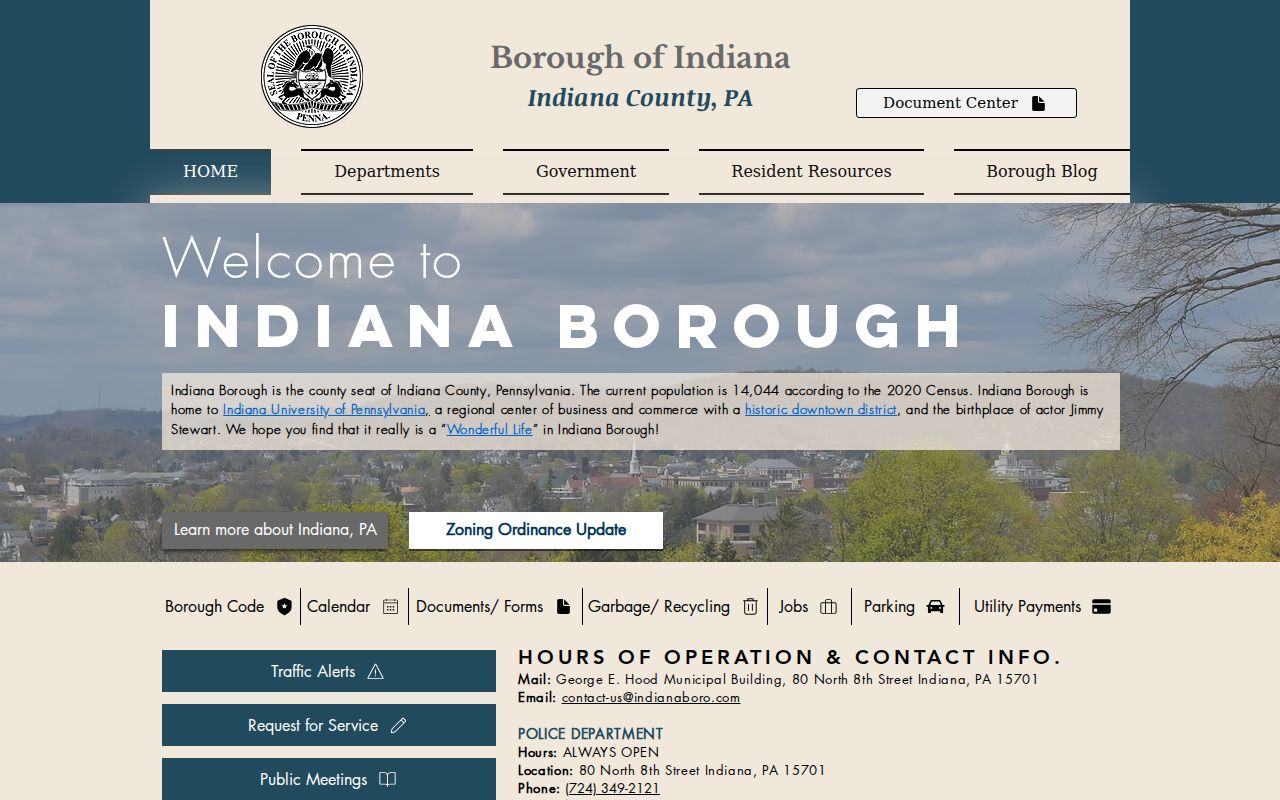
The borough source anchors the local police and open-records side of an Indiana records search.
The Census QuickFacts profile for Indiana borough supplies the newer population estimate.
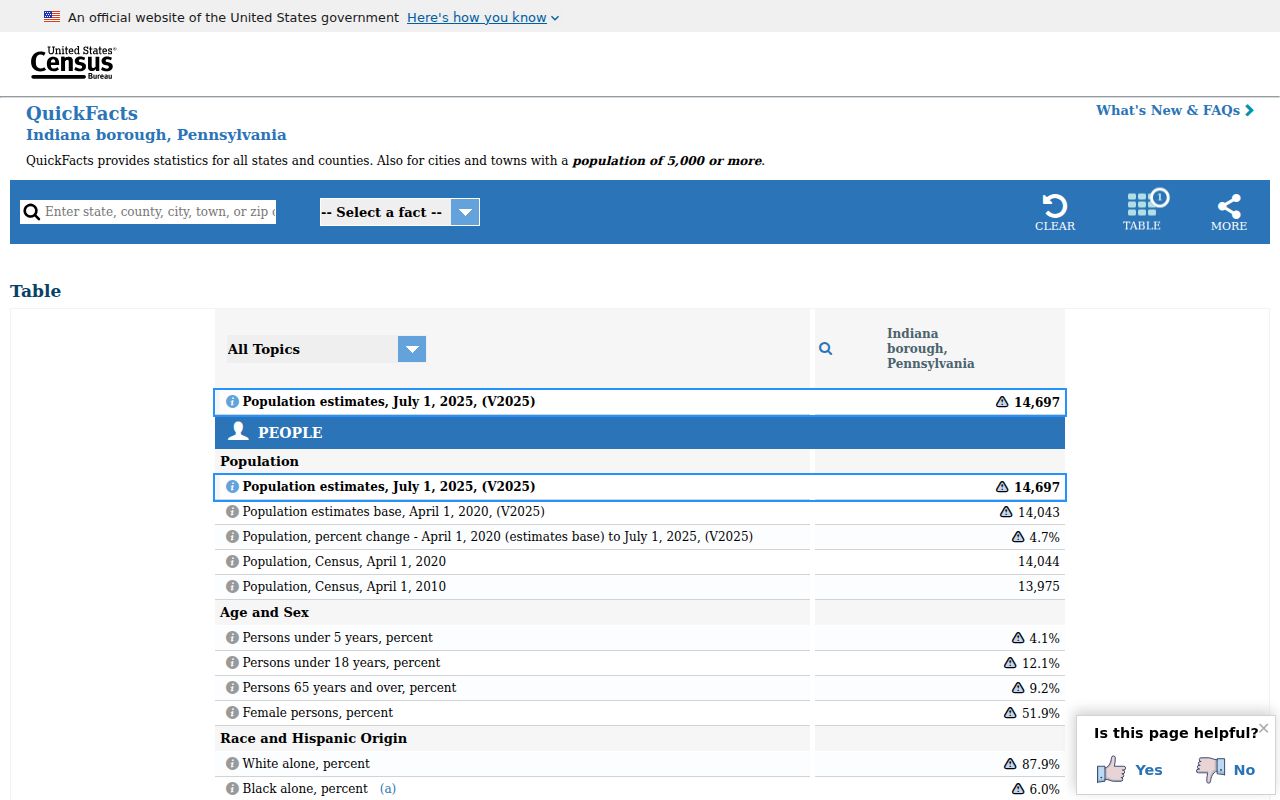
Population figures give scale without substituting unverified crime counts, which were not available from an official city-level export.
Where Indiana Records Go
A borough police report can lead to a complaint before the Indiana-area MDJ. Fingerprints and arrest data may flow to the Pennsylvania State Police Central Repository. If major charges are held, the filing moves to Common Pleas, where the Clerk of Courts maintains the case record. The court disposition should return to the repository, although timing and identifier mismatches can leave a short-term gap.
Record flow: Indiana Borough Police or IUP Police › Indiana-area Magisterial District Court › Indiana County Court of Common Pleas › Pennsylvania State Police Central Repository
Check the source closest to the event for recent activity. Use the court for the legal outcome and PATCH for the Pennsylvania repository product. None of those sources is a substitute for the full police narrative.
Matching Indiana Dockets to People
A participant-name result is a lead, not identity proof. Indiana has many students, residents, and visitors passing through its agencies. Open the docket and compare the county, docket number, filing date, court level, OTN, and arresting agency where lawfully shown. A middle name or date range can narrow a broad query, but the record must still be assessed in context.
If a recent case cannot be found, try the specific district court, check the spelling, and call the MDJ or Clerk. The record may not yet be entered, may never have produced filed charges, or may be excluded from public view. Do not treat silence from a public search as proof that no record exists.
Public Access Rules in Indiana
Police requests and court requests use different rules. Pennsylvania's Right-to-Know Law can reach borough-held public records, but it is not a universal key to investigative material. Judicial case records follow the UJS public-access policy and the Clerk route. A request should identify the incident, date range, agency, and exact record, then ask for segregable public parts if an exemption applies.
Key Statutes:
Pennsylvania Right-to-Know Law sets the formal request route; agencies ordinarily respond within five business days and may issue a written extension.
18 Pa.C.S. Chapter 91 defines criminal-history record information and controls state dissemination.
UJS Public Records Policy governs access and redaction for Pennsylvania judicial case records.
Keep the agency's response. A Right-to-Know denial should state its basis and appeal route, while a court-record question belongs with UJS or the Clerk rather than the county open-records officer.
Indiana Criminal Records After Court
The police report, jail intake, court docket, and PSP repository entry can remain separate after a case ends. A dismissal does not by itself erase every agency record. Public UJS search omits sealed, expunged, and limited-access matters, while the original custodian applies the order within its own system. Update times differ.
For a case outcome, read the Common Pleas or MDJ disposition. For one's own fullest Pennsylvania repository view, PSP provides the subject-only Access and Review process. A person correcting an error should start with the office that created the wrong item, then use the court petition or PSP challenge route that fits the record. The broader Indiana County criminal-history overview explains those county and state channels in more depth.