
Indiana County Criminal Court Cases
Indiana County is Pennsylvania's 40th Judicial District. Magisterial District Judges handle the first steps in many misdemeanor and felony matters, including the complaint, preliminary arraignment, bail, and preliminary hearing. They also hear summary, traffic, and nontraffic matters. When charges are held for court, the file advances to the Indiana County Court of Common Pleas. The Clerk of Courts maintains that criminal record, while the Prothonotary side of the same combined office handles civil files.
The difference is practical. Ask for the Clerk of Courts or criminal division at the Indiana County Courthouse, 825 Philadelphia Street, Indiana, PA 15701. The office is on the first floor, keeps weekday hours from 8:00 a.m. to 4:00 p.m., and can be reached at 724-465-3855 or pcc@indianacountypa.gov. A request tied to a docket number is far easier to locate than a broad name request.
The official Indiana County Court of Common Pleas page shows the local court structure and resources.
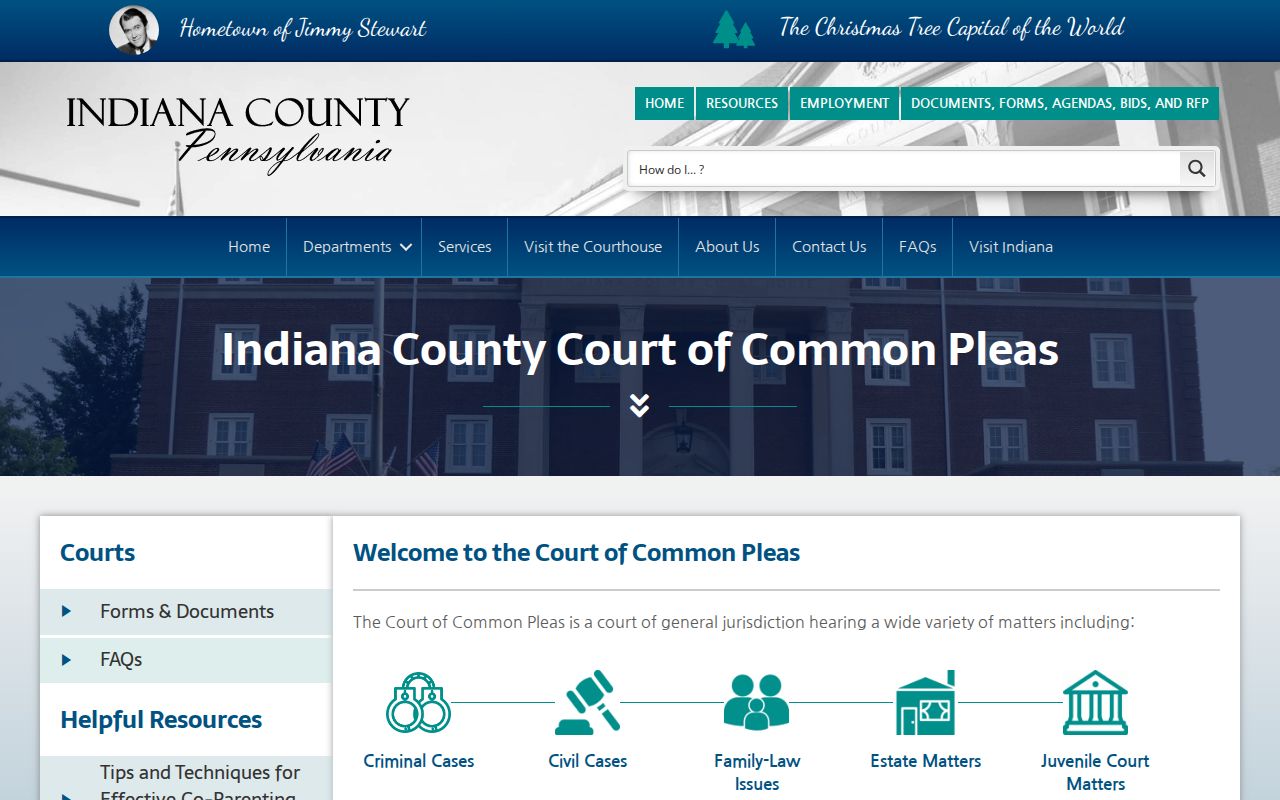
The court page grounds the search in the 40th Judicial District rather than treating every county docket as the same kind of file.
Indiana County Docket Types
UJS labels matter because each label points to a different part of the local record path. A Common Pleas Criminal docket covers major criminal cases after they reach county court. A Summary Appeal docket tracks an appeal from a traffic or nontraffic summary conviction. A Miscellaneous docket can include bail appeals, search-warrant matters, contempt, and related filings. At the Magisterial District Court level, criminal complaints and summary or traffic matters remain in their own categories.
A result row is only a lead. Open the docket sheet and match the court, county, filing date, and case identifiers. Same-name results do not prove that two files concern the same person. The official UJS Case Search supplies the public statewide entry point.
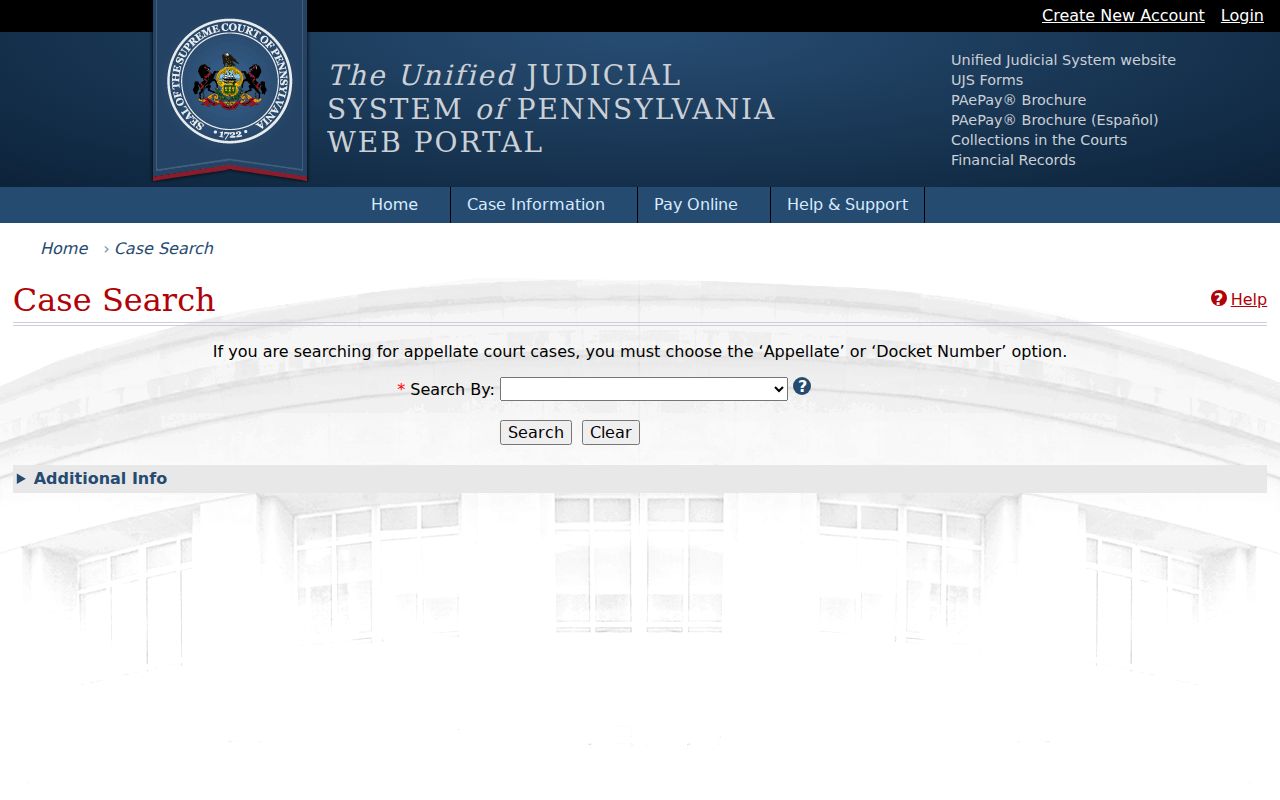
The public search image shows why choosing the right court type and Indiana County filter comes before reviewing any match.
Searching Indiana County Case Records
Start online, then move to the clerk when the public docket does not supply the document needed. UJS searches docket sheets and calendars across Pennsylvania. It does not turn every complaint, motion, exhibit, or transcript into a downloadable attachment. Recent entries may also take time to appear after the clerk receives them.
- Open UJS Case Search and select Court of Common Pleas or Magisterial District Court.
- Choose participant name when the docket number is unknown, then enter the best known spelling.
- Set the county to Indiana and narrow the filing dates or case category when useful.
- Open the docket sheet icon and verify the docket number, OTN, charge entries, events, disposition, and sentence.
- Ask the Indiana County Clerk of Courts for pleadings, older material, or a certified copy, using the docket number.
| Field Label | Type | Required | Notes |
|---|---|---|---|
| Court Type | Dropdown or tab | Yes | Choose Common Pleas or Magisterial District Court |
| Search Type | Dropdown or tab | Yes | Name, docket, organization, OTN, or incident number where offered |
| Last Name | Text | For name search | Spelling affects results |
| First and Middle Name | Text | No | Helps narrow common names |
| Date Filed | Date range | No | Limits the search period |
| County | Dropdown | Conditional | Select Indiana |
| Case Category | Dropdown | Conditional | Criminal, Summary Appeal, Miscellaneous, traffic, or nontraffic |
| Docket Sheet | Result action | No | Opens the current printable docket |
The result controls change with court and search type. Use only fields the portal offers for that search, and keep the docket number once a match is verified. That number is the bridge from the statewide index to Indiana County's paper case file.
Indiana County Clerk File Access
The local counter fills the gap between a docket index and the actual case papers. Indiana County's combined Prothonotary and Clerk of Courts title can cause confusion. Criminal searchers need the Clerk of Courts side. The office can help with attachments, older material, certification, and questions about entries that have not yet reached UJS. Its public page also warns that some online services add convenience and card-processing costs.
Do not confuse the civil subscription product with the criminal docket search. The civil portal carries a $30 monthly charge plus a $20 setup fee. Public UJS criminal docket searching is a separate route. The Indiana County Clerk of Courts page is the source for current office services and contacts.
The clerk image reinforces the local distinction between the criminal counter and the office's civil services.
Inside a Indiana County Case File
A Pennsylvania docket sheet is a structured summary and event index. It can identify the court, docket number, filing date, OTN, attorneys, arresting agency, charges, bail, scheduled events, and sentence. It may also show assessments, payments, and balances. The underlying file may contain the complaint, information, motions, plea papers, orders, exhibits, or a transcript that does not appear as an online attachment.
| Case Number and Court | Identifies the court level, county, and unique docket. |
|---|---|
| Charges | Lists charge sequence, statute, offense text, grade, and disposition. |
| Docket Entries | Chronology of filings, orders, hearings, pleas, and other court action. |
| Bail and Events | May show bail type, amount, status, scheduled dates, and continuances. |
| Disposition | Records outcomes such as dismissal, withdrawal, plea, verdict, diversion, or closure. |
| Sentence and Financials | May list confinement, probation, fines, costs, restitution, payments, and balance. |
CHRI is broader in some ways and narrower in others. Pennsylvania law includes identifiable arrests, formal charges, and dispositions in criminal-history record information, but excludes investigative intelligence, witness narratives, and treatment information. A UJS docket is not a full PSP rap sheet or a police report.
When Indiana County Entries Lag
A recent filing that does not appear online may still exist at the courthouse. UJS says recent clerk entries may not show at once and disclaims completeness. First, rerun the search with the exact docket or OTN. For an unsuccessful Magisterial District Court query, change the filter from County to the specific District Court when known. The Indiana, Blairsville, Homer City, and Clymer contact routes are published at 724-463-8781, 724-459-7203, 724-479-8082, and 724-254-4348.
If the entry remains absent, call the Clerk of Courts with the docket number and filing date. Public reports also require JavaScript, cookies, current TLS support, and pop-ups. A browser setting can look like an empty record when the report simply failed to open. UJS explains its separate account and system limits on the Secure Services page.
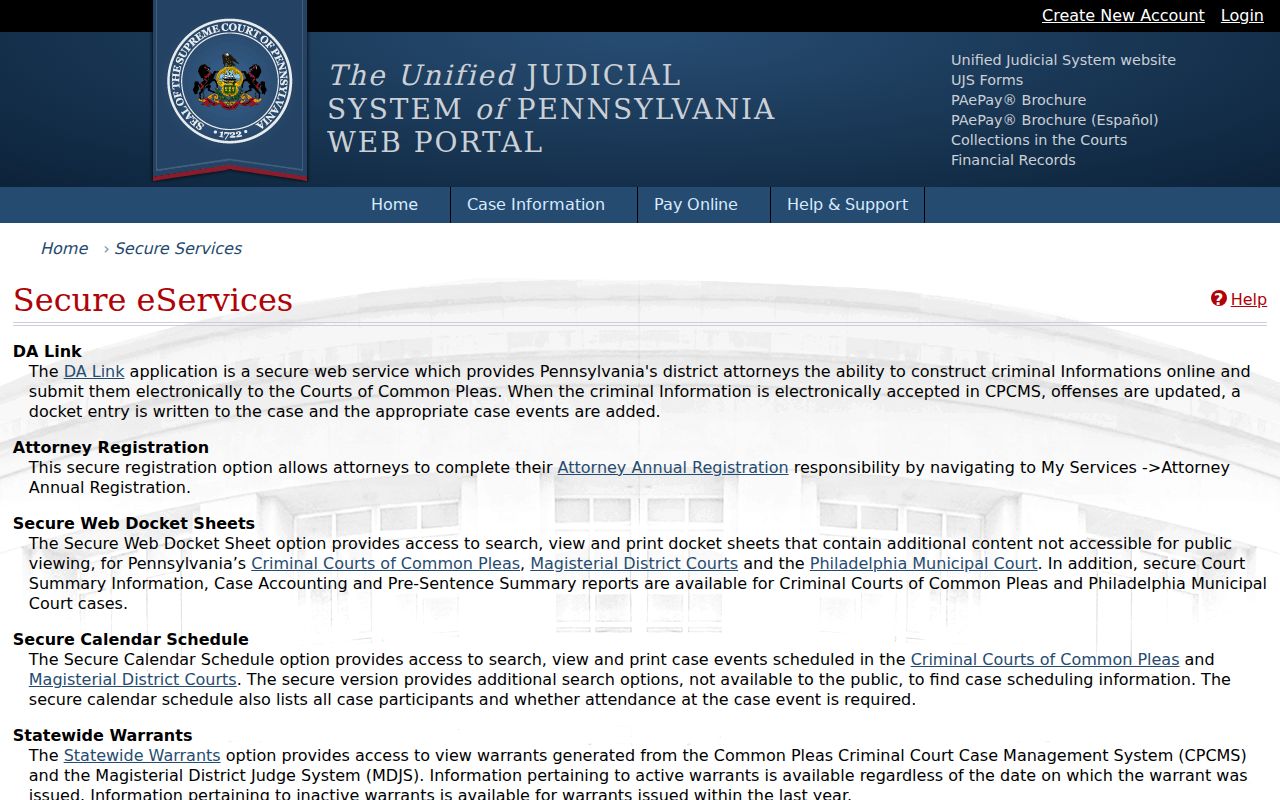
The secure-services view helps distinguish public docket access from restricted tools, including warrant information that is not open to all users.
Note: A missing online entry is a prompt to verify with the clerk, not proof that no Indiana County case exists.
How a Criminal Case Moves
A misdemeanor or felony matter can begin before a Magisterial District Judge. The judge addresses the preliminary arraignment, bail, and hearing. Charges may be withdrawn, dismissed, or held for court. A held case moves to Common Pleas, where the DA may file an information. Formal arraignment or a waiver follows, then motions, status conferences, a plea or trial, disposition, and sentence.
Case flow: Charges Filed › Arraignment › Pretrial › Plea or Trial › Disposition › Sentencing
Indiana County's forms add local detail to that path. Published forms include a Criminal Motion for Continuance, DUI Criminal Call Form, felony or DUI plea colloquy, waiver of arraignment, waiver of jury trial, interpreter request, and criminal in-forma-pauperis petition. Only the steps entered in a particular case belong to that case history.
Indiana County Diversion Outcomes
A docket outcome must be read by its own terms. ARD, probation without verdict, a guilty plea, and a conviction are not interchangeable. Indiana County publishes a Petition for Probation Without Verdict and a Drug Treatment Court application. The District Attorney also identifies ARD and Fast Track among its programs. These entries can mark different legal paths, so the final disposition line matters more than the mere presence of a charge.
The official Indiana County District Attorney page identifies the office that prosecutes county cases and explains its programs.
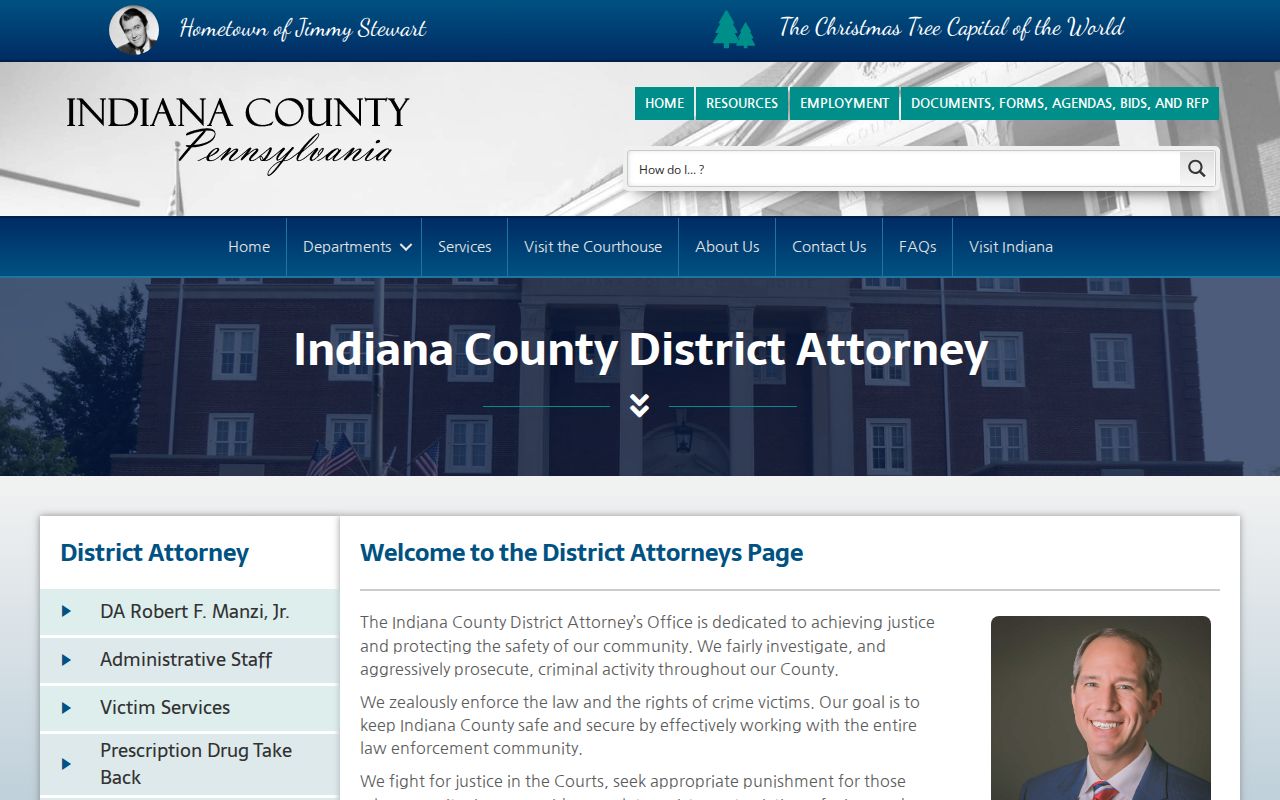
The DA image connects the docket's filed charges and diversion entries to the county office responsible for prosecution.
Indiana County Defender Applications
The Public Defender's Office sits on the courthouse first floor and represents financially eligible people in proceedings where counsel is constitutionally required. Its scope includes incarceration-eligible criminal or traffic cases, juvenile cases, probation or parole revocations, extradition, and certain related matters. The office can be reached at 724-465-3925 or pdefender@indianacountypa.gov during county weekday hours.
The official Indiana County Public Defender page links its application, ARD application, probation-without-verdict petition, and waiver of arraignment.
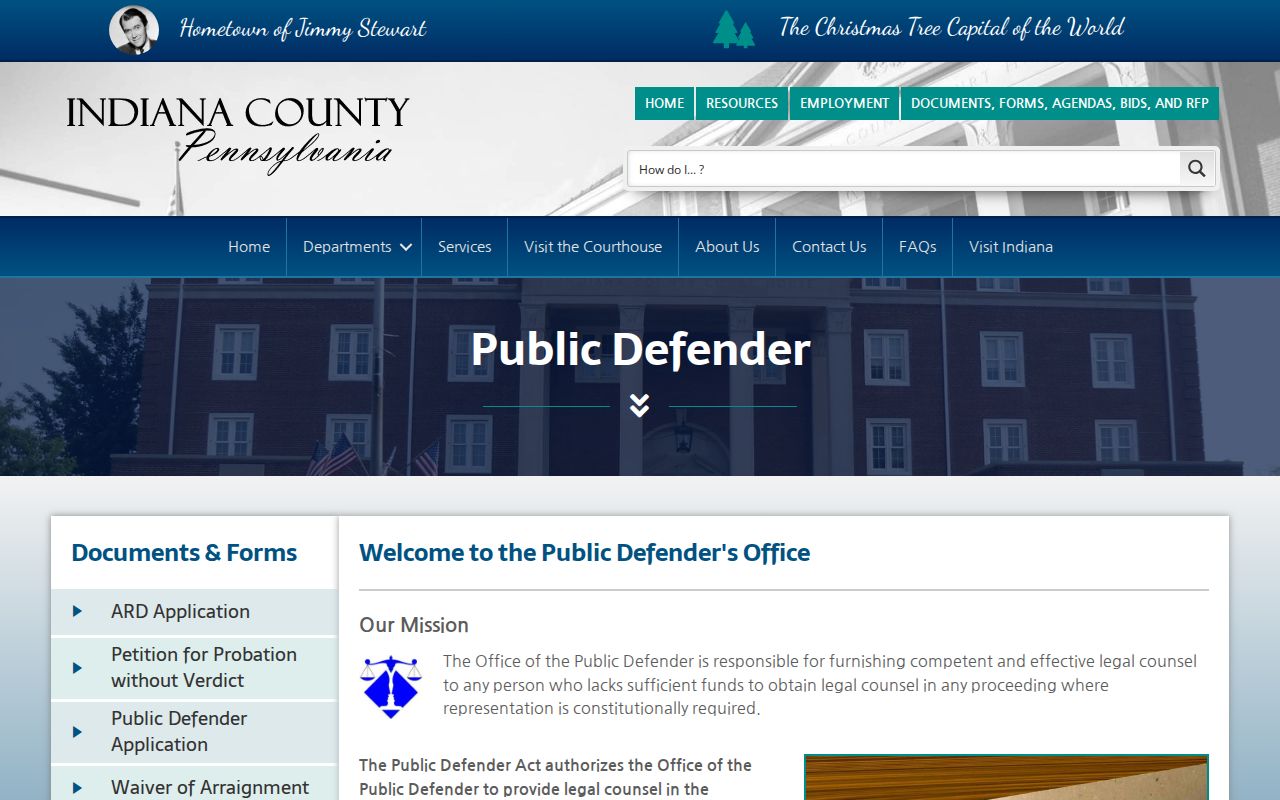
Those local forms show how counsel and diversion requests become part of the Indiana County court process.
Case Record Access & Restrictions
Public access does not mean every fact or file is open. The UJS public search omits juvenile, expunged, pending-expungement, sealed, limited-access, and destroyed dockets. Court policy also governs redaction of sensitive data. A public docket view may therefore contain less than the court's working file, while some restricted matters will not return a result at all.
The Pennsylvania Right-to-Know Law is not the main route for judicial case records. Court files should go through UJS and the Clerk of Courts. State criminal-history products go through PSP. Police investigative files follow their own access rules and exemptions. For broader context beyond the case file, the county's criminal history overview explains how those record systems differ.
When a public case should be available but cannot be found, give the clerk the name, docket or OTN, court level, and an approximate filing date. Ask whether the matter is too recent for UJS, archived, misfiled under another court category, or legally restricted. Do not assume the outcome from an empty search.